Position sizing and daily loss limits
Fixed lots and risk per trade answer different questions, and an automated system needs a daily stop more than a human does. How to size one strategy, and how to size several running at once.
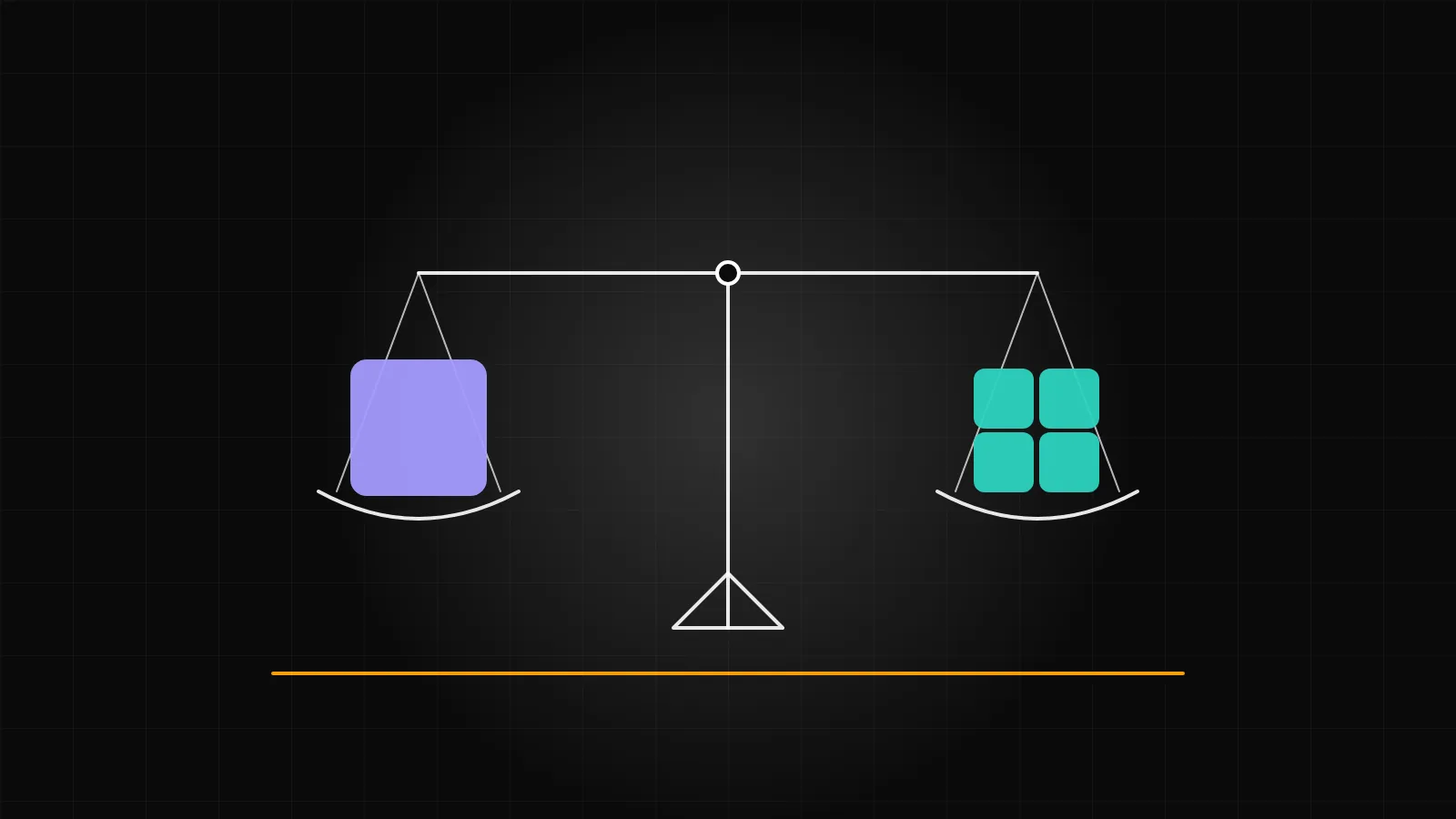
Most of the attention in trading goes to entries, and most of the outcomes are decided by size. Two traders can run the same rule on the same market and end the year in very different places because one of them traded three times the quantity on the days that went wrong. Position sizing is the part of a system that decides how much a bad idea can cost, and a daily loss limit is the part that decides how much a bad day can cost.
This post covers the two common ways of sizing a trade, why a daily stop matters more for an automated strategy than for a person, and what changes when several strategies run at once.
Fixed lots: simple, and blind to risk
The simplest sizing rule is a fixed quantity: one lot, ten shares, 0.05 of a contract, every trade. It has real merits. It is easy to reason about, easy to check in a trade list, and it keeps the test and the live run comparable, because every trade carries the same weight.
Its weakness is that it ignores where the stop is. A trade with a stop ten points away and a trade with a stop fifty points away risk very different amounts of money at the same fixed size. Over a hundred trades, your results are being decided by stop distance rather than by the quality of the signals, and you did not choose that.
Fixed lots also do not move with the account. After a losing month, the same quantity is a larger share of what remains; after a winning month, a smaller one. Neither is necessarily wrong, but it is a decision you are making by not making it.
Risk per trade: size from the stop
The alternative is to decide first how much money a single losing trade may cost, and work the quantity out from there. The arithmetic is short: quantity equals the risk amount divided by the distance to the stop, expressed in money per unit.
Suppose you decide that one trade may lose 10 units of your account currency, and the rule places the stop 5 points away on an instrument where one lot moves 100 units per point. Then the quantity is 10 ÷ (5 × 100) = 0.02 lots. A trade with a wider stop gets a smaller quantity, a tighter stop a larger one, and every losing trade costs about the same.
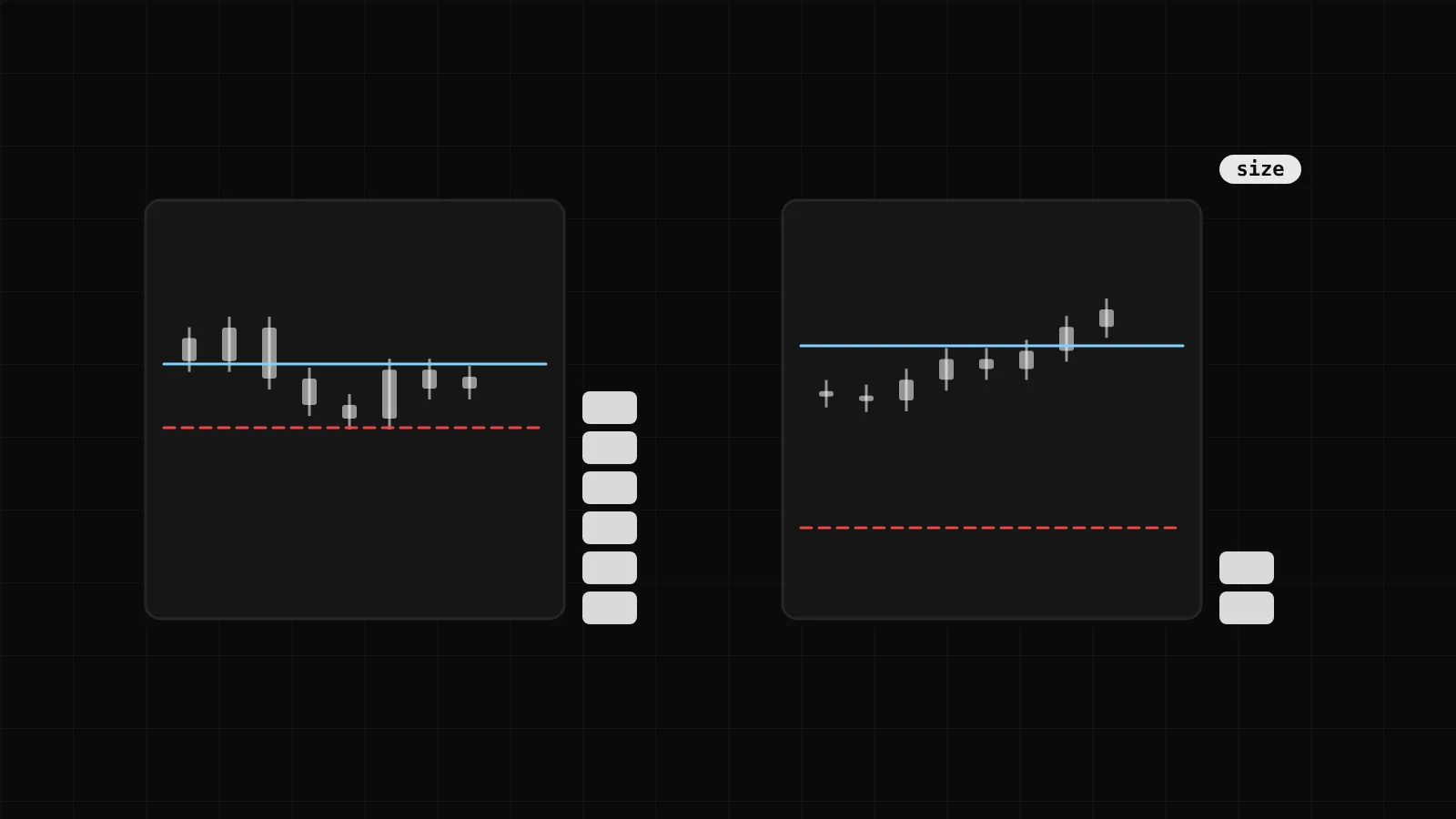
The risk amount can be a fixed sum or a percentage of the account. A percentage shrinks the size after losses and grows it after gains, which is the point; a fixed sum keeps the size steady, which suits accounts with a hard limit on what may be lost. A common convention is a small single-digit percentage per trade. The right number for you depends on how many trades the rule takes, how long its losing streaks were in testing, and how much drawdown you would honestly sit through. Decide it before the first trade, not after the first loss.
Two cautions. Risk per trade only works if the rule has a stop; without a defined stop distance there is nothing to divide by. And the stop is a plan, not a promise: a gap or a fast market can fill it further away than planned, so the risk amount is a floor on the loss, not a ceiling.
Why a daily stop matters more for an automated system
A discretionary trader on a bad day usually slows down. After three losses, most people hesitate, trade smaller, or close the screen. It is not a reliable protection, but it exists.
An automated rule does none of that. If the market is doing something the rule handles badly, it will take the signal, lose, take the next signal and lose again, for as long as the conditions keep firing and the session is open. A rule that normally trades twice a day can trade eight times on a day that is choppy in just the wrong way. The losses are each within the per-trade limit, and the day is still a disaster.
A daily loss limit is the answer: a fixed amount of money, or a percentage, at which the strategy stops opening new positions for the rest of the day. It should be set at a level that a normal losing day does not reach, so it acts as a circuit breaker rather than a daily event. A useful way to choose it is to look at the worst days in testing and set the limit somewhat beyond them; if the limit trips often, either it is too tight or the rule is behaving differently from the test, and both are worth knowing.
A daily limit also does something for you psychologically. Knowing the system will stop itself makes it easier to leave it alone on an ordinary losing day rather than intervening by hand.
Sizing across several strategies
When several rules run at once, three new questions appear.
What is the combined risk at any moment? Three strategies each risking a small percentage per trade can hold positions at the same time, so the amount at risk is the sum. If two of them trade correlated instruments, such as gold on two timeframes, a single move can hit both stops together. Set a per-trade risk that still makes sense when every strategy is in a position at once.
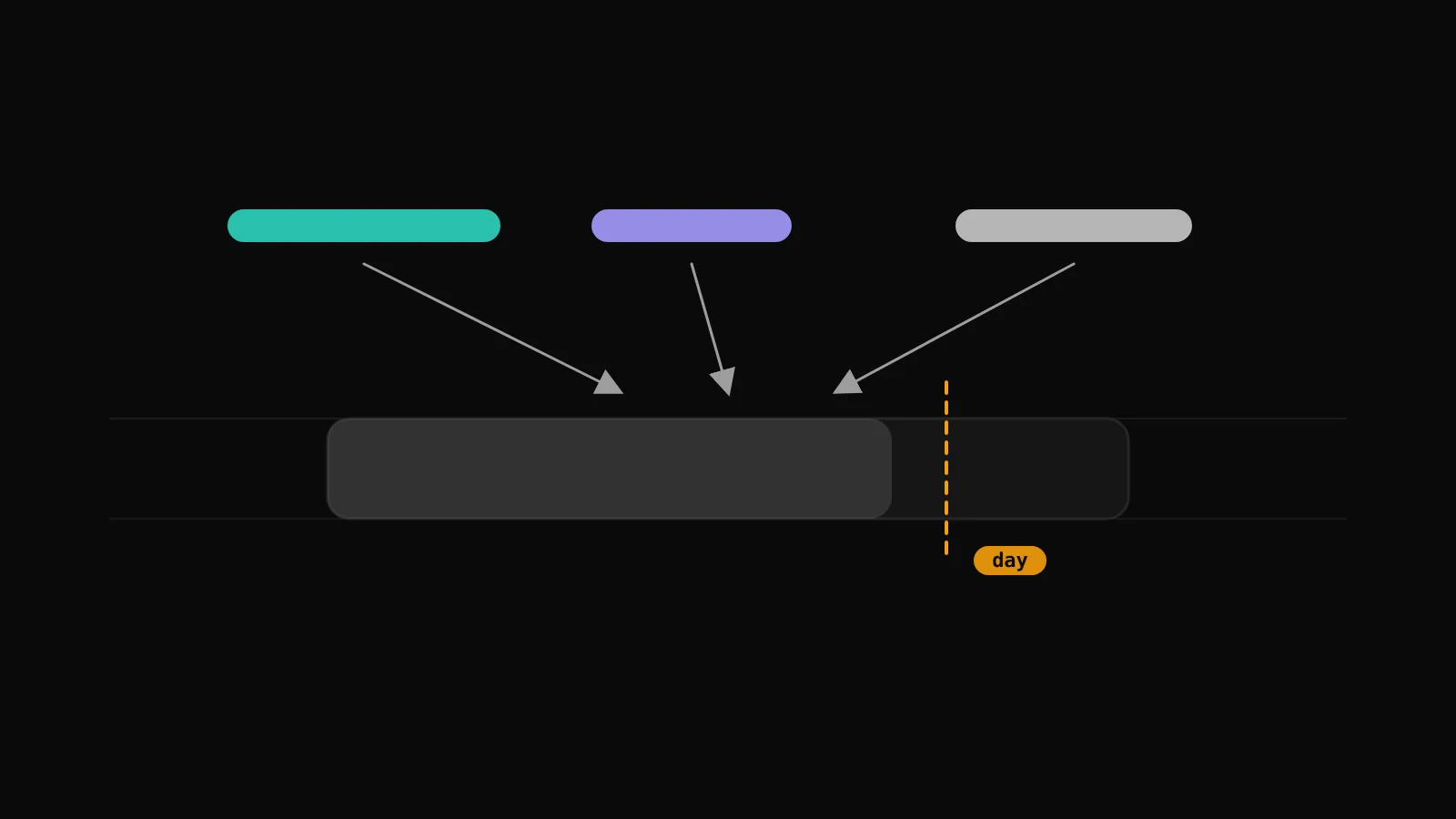
How is the daily limit shared? You can give each strategy its own daily stop, which protects the others from a rule having a bad day, and you can also have a limit for the account as a whole, which protects you from every rule having the same bad day. Both at once is reasonable; the account limit catches what the per-strategy limits miss.
Does each strategy get the same share? Not necessarily. A rule tested over a year with many trades has earned more confidence than one tested over a month with twenty. Give a new rule a small allocation and raise it as the live record grows.
A short set of questions to answer in writing
How much may one trade lose, and is that a fixed sum or a percentage?
Where does the stop come from, and what quantity does it produce on this instrument?
At what loss does each strategy stop for the day, and at what loss does the whole account stop?
If every strategy is in a position at the same time, what is the total at risk?
What would make you change any of these numbers, and how long would you wait before doing so?
If you cannot answer these, the system is not ready to run on real money, however good its signals look.
How DalRoti helps
The sizing step of the DalRoti strategy builder offers the modes discussed here: fixed lot, percentage of balance, percentage of equity, a fixed risk amount, and lot from stop-loss distance, which is the one that keeps the money at risk the same on every trade and needs a stop set in the risk step. A daily loss limit stops a strategy for the day when it is reached, and there are also limits on the total number of entries and entries per day. Kill switches work per account and per strategy.
For copied trades, each follower account has its own sizing rule and a maximum daily loss that pauses the copy automatically. LockMe lets you lock a trading account for a period you choose: open positions are closed, pending orders cancelled, and no new orders are accepted until the time is up. Before going live, the checklist in the help centre asks you to size by balance, fixed risk or stop distance rather than carry a fixed lot over from a paper account with a different balance.
Trading involves a high risk of loss. DalRoti is a software tool and does not guarantee any profit. Decide your own risk and position size.
AI Generated