Option chains for beginners
Strikes, calls and puts, expiry, premium, lot size, and the difference between intrinsic and time value, in plain words. What to check on the chain before placing any options order, with no strategy recommendations.
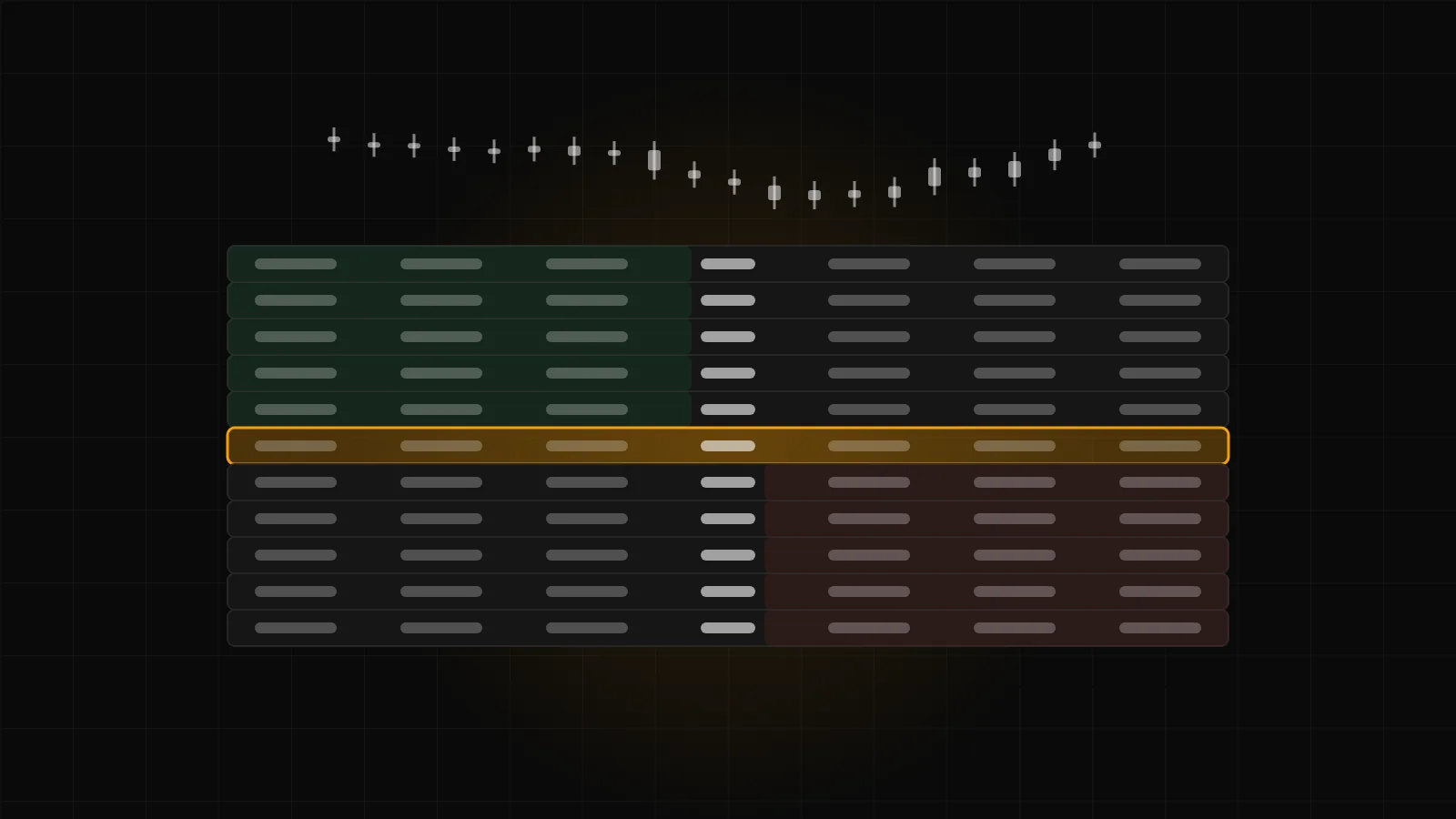
An option chain is a table, and like most tables it is intimidating until you know which columns matter. This post explains what the chain shows and what each term means, so that when you open one you can read it rather than guess. It deliberately stops short of telling you what to buy or sell; that is a separate decision that depends on your view, your capital and your tolerance for loss, and no introduction can make it for you.
What an option is, in one paragraph
An option is a contract that gives its buyer the right, but not the obligation, to buy or sell an underlying asset at a fixed price on or before a fixed date. The buyer pays a price for that right, called the premium. The seller receives the premium and takes on the obligation to deliver if the buyer exercises. Everything on the chain is a way of describing those contracts and what the market will currently pay for them.
Reading the chain
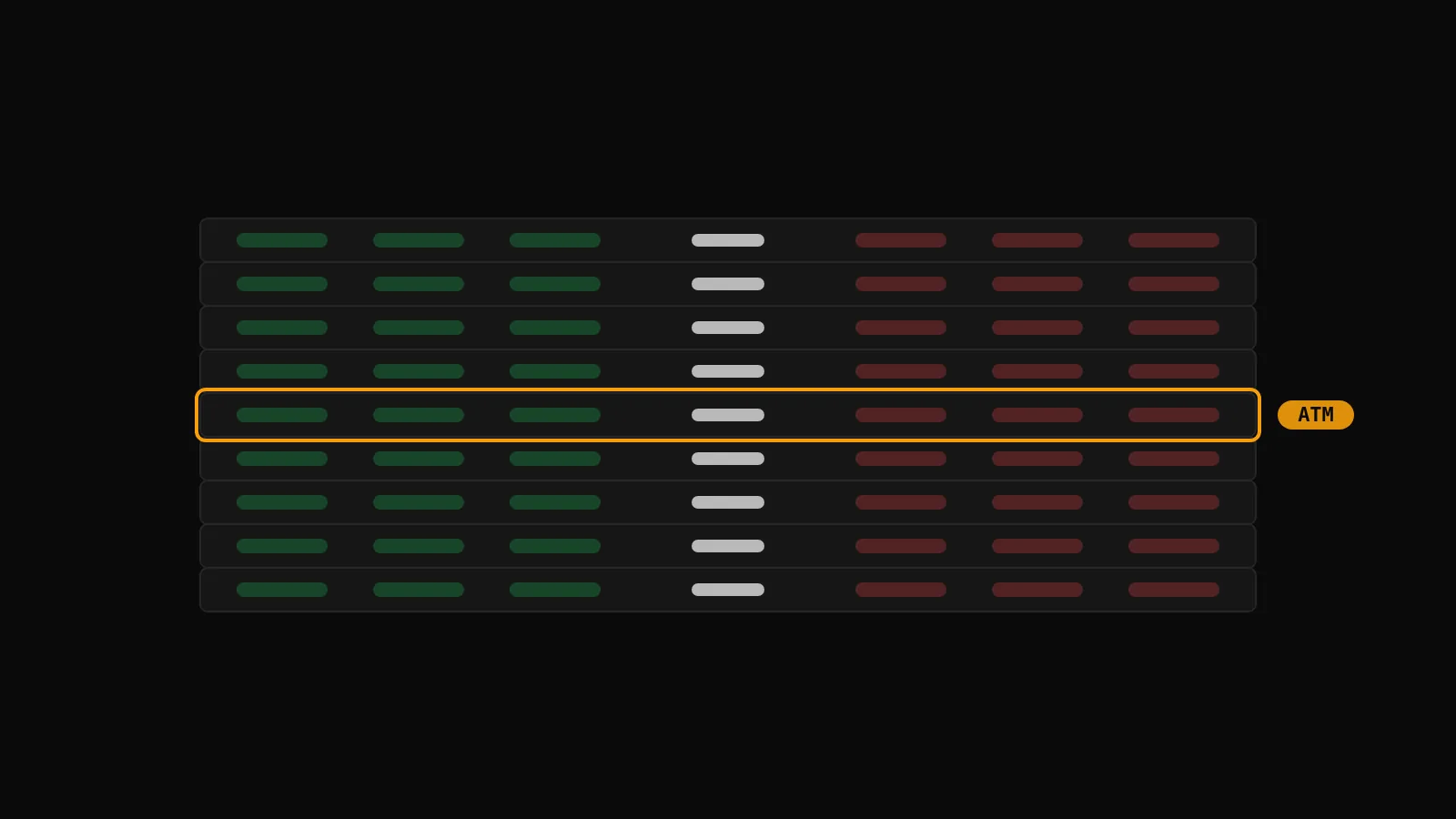
Strike. The fixed price in the contract. The chain lists many strikes for the same underlying, typically at regular intervals above and below the current price. The strike nearest the current price is called at-the-money (ATM); strikes that would be profitable to exercise right now are in-the-money (ITM); the others are out-of-the-money (OTM).
CE and PE. In Indian markets a call option is labelled CE and a put option PE. A call gives the right to buy at the strike; a put gives the right to sell at the strike. On most chains, calls sit on one side of the strike column and puts on the other, so a single row shows the call and the put for the same strike.
Expiry. The date on which the contract settles. Index options on the main indices have weekly and monthly expiries; most stock options are monthly. The chain is for one expiry at a time, and the same strike has a different premium for each expiry.
Premium (LTP). The last traded price of the option. This is the price per unit of the underlying; the money that changes hands is the premium multiplied by the lot size.
Lot size. Options trade in lots, and the lot size is set by the exchange for each underlying and revised from time to time. If a contract's lot size is 50 and the premium is 100, one lot costs 5,000 in premium. Always do this multiplication before reading any premium as "cheap".
Open interest (OI). The number of contracts outstanding at that strike. It tells you where activity is concentrated, and it changes as positions are opened and closed. It does not tell you which way those positions expect the market to move.
Volume. How many contracts traded in the session. Together with OI, it gives a sense of how easy it will be to get in and out at a reasonable price.
Bid and ask. The best price a buyer is offering and the best a seller is asking. The gap between them is a real cost: a wide spread on a thinly traded strike can take a noticeable share of the premium just to enter and exit.
Intrinsic value and time value
The premium has two parts, and separating them is the single most useful habit a beginner can build. Think of it as a bar with two segments: a solid part that would survive exercise today, and a part that shrinks as the clock runs.
Intrinsic value is what the option would be worth if it were exercised right now. For a call it is the current price minus the strike, if that is positive, and otherwise zero. For a put it is the strike minus the current price, if positive, and otherwise zero. An out-of-the-money option has no intrinsic value by definition.
Time value is the rest: premium minus intrinsic value. It is what the market pays for the possibility that the option becomes worth more before expiry. Time value depends on how long is left, how much the underlying tends to move, and how far the strike is from the current price. It is largest for at-the-money options and shrinks towards zero as expiry approaches; on expiry day what remains is intrinsic value alone.
The practical consequence is that an option's price can fall while the underlying does nothing, simply because time has passed. A buyer of an out-of-the-money option is paying entirely for time value, and needs the underlying to move enough, soon enough, to replace it. A seller is collecting it, and is exposed if the move comes. Neither side is right or wrong in general; the point is to know which part of the premium you are paying for or being paid for.
What to look at before any options order
Before placing an order on any option, run through the following. None of these tell you whether the trade is a good idea; they tell you whether you understand the contract you are about to trade.
The exact contract. Underlying, expiry date, strike, and whether it is CE or PE. A mistake in any one of these is a different trade.
The lot size and the total premium. Premium multiplied by lot size, multiplied by the number of lots. This is the amount a buyer can lose in full; for a seller it is the amount received against an obligation that can cost far more.
Intrinsic and time value. How much of the premium is time value, and how many days are left for it to decay.
Liquidity. Open interest, volume and the bid-ask spread at that strike and expiry. A thin strike can be hard to exit at a fair price.
Margin, for sellers. Selling options requires margin set by the exchange and the broker, which can change with the market. Check the requirement with your broker before the order, not after.
What happens at expiry. Whether you intend to hold into expiry, and if so, what settlement means for this contract under the exchange's current rules.
Options are a leveraged instrument: a small premium controls a much larger notional value, and for sellers the loss can exceed the premium received. Check the current rules with your broker and regulator, and if any line above is unclear, that is a reason to wait rather than to proceed.
How DalRoti helps
DalRoti's symbol search understands contracts typed as you would say them, such as "NIFTY 24 NOV 23500 CE" or "banknifty55600pe", and search results tag each row as tradable or chart only. The DalRoti app includes an Option chain view, and the chart has an OI overlay for derivatives so that open interest can be read alongside price. Market Pulse labels price and open-interest changes as long build-up, short build-up, long unwinding or short covering, which is a description of positioning rather than advice.
Live NSE and BSE option prices come through your own connected Indian broker account. Practice first on the DalRoti Paper account, where fills are simulated at live prices with no real money, and where the order pane works the same way it does live. In the strategy builder, an index strategy can be set to trade via an option by moneyness (ATM, ITM or OTM, with a number of strikes from ATM) and expiry (nearest weekly, next weekly or monthly), and the form shows the exact contract it would pick right now.
Trading involves a high risk of loss. DalRoti is a software tool and does not guarantee any profit. Decide your own risk and position size.
AI Generated