From idea to live, a step-by-step path for a trading rule
Write the rule, backtest it, paper trade it, run it small, review it, then scale. Six gates between a trading idea and real money, and what has to be true before you pass each one.
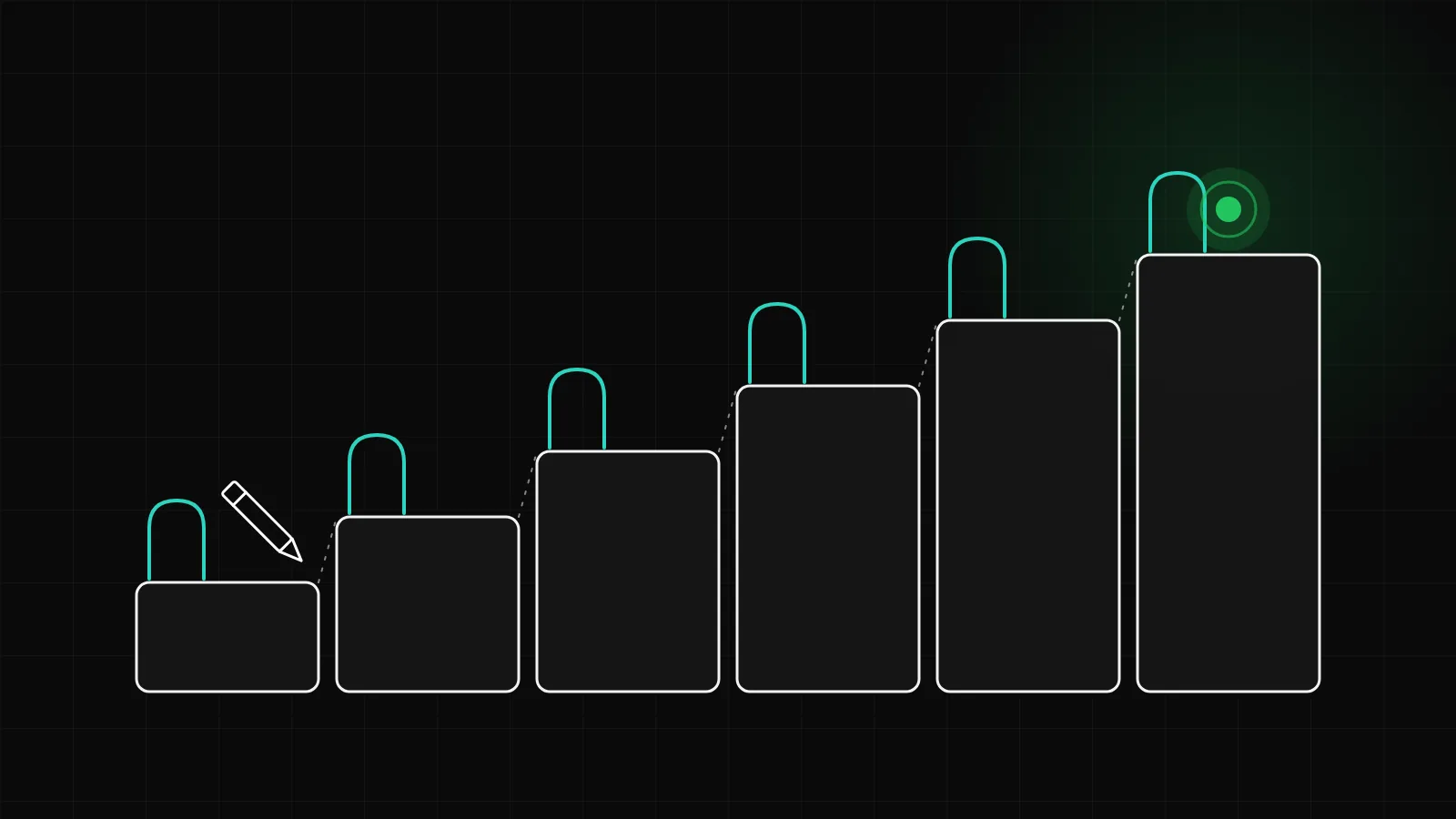
The distance between "this would probably work" and a strategy running on a real account is best crossed in stages, with a gate at each one. The gate has a question, and you do not move on until the answer is yes. This is slower than going live on the day you have the idea, and that is the point: each stage is designed to catch a particular way the idea can be wrong before that mistake costs money.
Here is the path we think works, with what to check at every gate.
Gate 1: write the rule down
The idea in your head is not yet a rule. Write it as four parts: the signal that opens a trade, the filter that decides when the signal is allowed to act, the exit, and the size. Every term must be measurable. "Breakout" becomes "close above the previous candle's high"; "when the market is trending" becomes an indicator condition on a specific timeframe; "take profit when it stalls" becomes a trailing stop or a time exit.
The gate question: could someone else read this and place exactly the trades you would? If any part needs your judgement to interpret, it is not finished. Keep a note of the reasoning behind each choice; you will need it when a parameter looks wrong later.
Gate 2: backtest
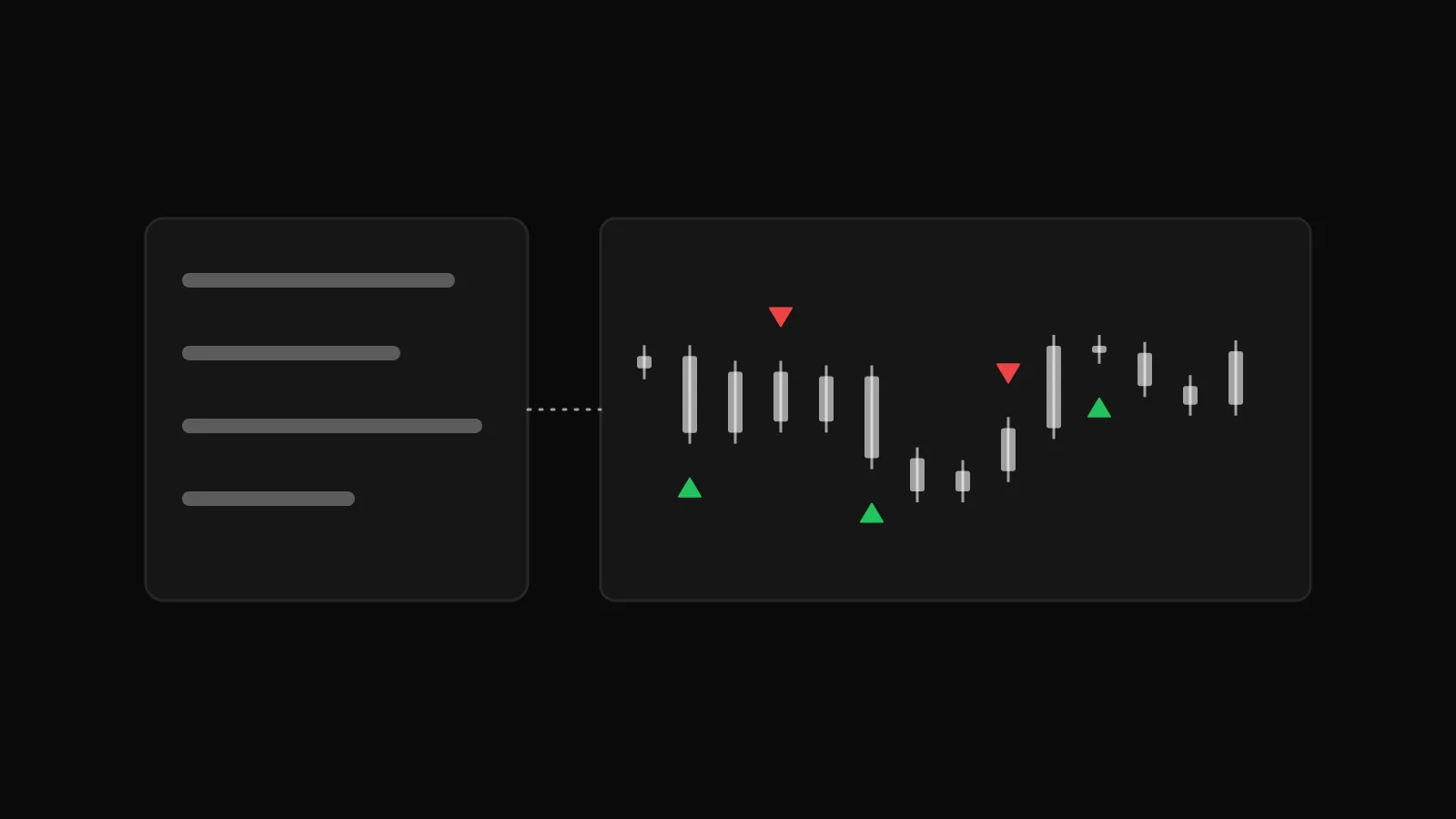
Run the written rule over past data with realistic costs. The purpose is not to find a good result; it is to find out whether the rule behaves as you intended and whether its results are the kind you could live with.
Check, in this order: the assumptions of the test (fill timing, spread, slippage, how a stop and target in the same candle were resolved); the number of trades; the worst drawdown and how long it lasted; and the shape of the equity curve. Then re-run with slightly different parameters and worse costs. A rule that only works at one setting with zero costs has failed this gate however the headline looks.
The gate question: with honest costs, over enough trades, does this rule produce results whose worst stretch you would actually sit through? If no, go back to gate 1 or drop the idea. Dropping an idea here is a success of the process, not a failure.
Gate 3: paper trade
A backtest fills at historical bar prices. A paper run takes the same rule and runs it forward in real time against live quotes, with simulated fills and no money. This is where timing problems show up: a signal that fires a few seconds after the candle closes, a fill at a worse price than the bar, a condition that behaves differently on live data than on history.
Run it for long enough to see a reasonable number of trades across different kinds of days, and at least one full trading week. Compare the paper trades with what the backtest produced over the same period. They will not be identical; the question is whether the differences have explanations you understand.
The gate question: does the live behaviour of the rule match what you tested, and can you explain every difference? Unexplained extra trades, missed trades or fills far from expectation mean the rule or its settings need attention before any real money is involved.
Gate 4: go live at small size
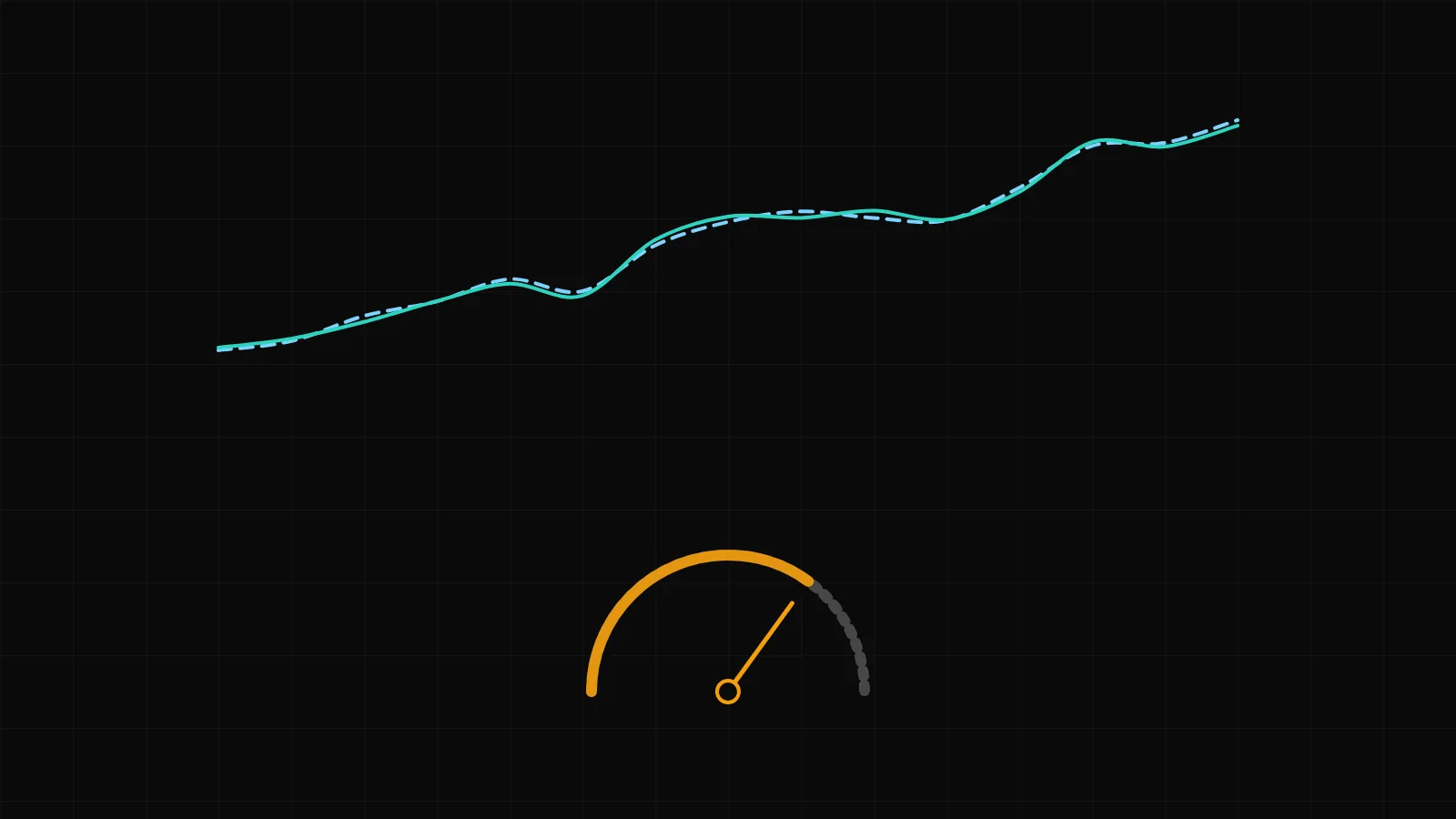
Real money changes two things: the broker is now part of the system, and so are you. Rejected orders, minimum quantities, product types, margin, session expiry and connection drops are all invisible on paper. Your own reactions to a real loss are invisible on paper too.
So start small: a size at which a bad week is unpleasant and not damaging. Before pressing the button, make sure the size is set from risk rather than copied as a fixed lot from the paper account, which may have had a different balance; that a stop-loss is defined and you know whether the broker or the platform holds it; that the broker connection is live and, for brokers that expire daily, logged in today; and that you know how to pause and how to stop.
The gate question: is every piece of the real-money path (sizing, stop, broker, pause, stop) in place, and is the size small enough that you will let the rule run without interfering?
Gate 5: review
After a defined period at small size, review before deciding anything. Compare the live trades with the paper run and the backtest. Look at rejected orders and their reasons. Look at fills against the prices you expected. Look at your own behaviour: did you override the rule, pause it in a panic, or change a parameter mid-week? Each of those is information about either the rule or about the conditions you need around it.
Write the review down. A paragraph a week is enough, but it must exist, because the decision at the next gate depends on it.
The gate question: do you understand why this rule did what it did, and is that consistent with the earlier stages?
Gate 6: scale
If the review is clean, raise the size in steps, not all at once, and review again after each step. Slippage and fills can change with quantity; so can your tolerance for drawdown. The limit on size is set by the account's daily loss limit and the total at risk across every strategy, not by how well the rule has done recently. Resist the urge to scale fastest after the best week; that is exactly when the next drawdown is most likely to feel worst.
Scaling is also where you decide whether the rule earns a permanent place or whether it was a good idea for a particular stretch of market. Rules can retire. The journal tells you when.
How DalRoti helps
The DalRoti strategy builder walks through the stages above in order: logic, entry, exit, size and risk, execution, backtest, then review. A plain-words summary describes the rule as you build it, and a validation step lists anything incomplete with a link to fix it. Saving creates an immutable version, so a backtest, a paper run and a live run each point at an exact version that later edits cannot change.
Backtests run on stored 1-minute history with explicit cost settings and a note of every assumption made. A paper run on the DalRoti Paper account has a Monitor page with an execution log and a Paper vs Backtest signal match over the same period, which is gate 3 in one view. Going live on a paid plan pins a version and a broker account, shows a risk summary and asks for confirmation; the help centre's go-live checklist covers sizing, stop protection and broker login. Pause stops new entries while exits still run; Stop halts the strategy without closing anything, so positions are yours to manage from the Positions pane. The Journal logs the trades from every connected account for the review at gate 5.
Trading involves a high risk of loss. DalRoti is a software tool and does not guarantee any profit. Decide your own risk and position size.
AI Generated